The Pride Tax: What It Really Costs When Asking for Help Feels Like Giving Up
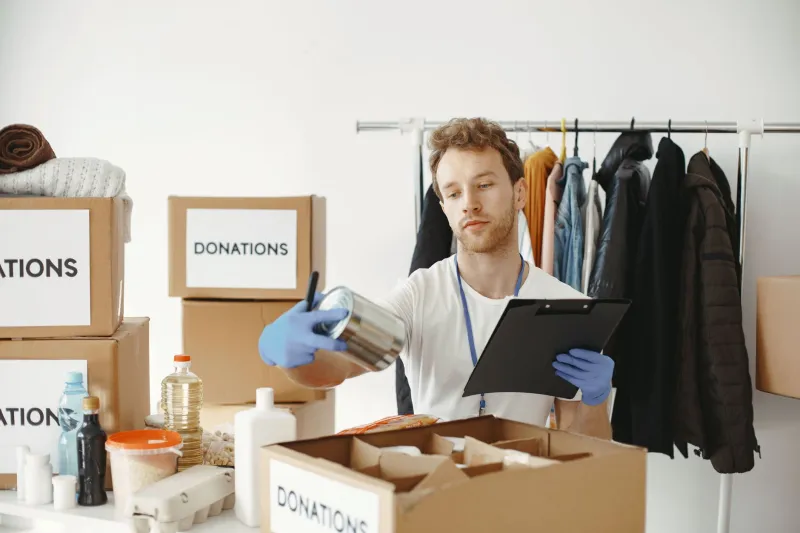
There's a food pantry in rural Ohio that throws away produce every single week. Not because donations dried up. Not because volunteers stopped showing. Because the families who need it most won't walk through the door.
The director, who asked to remain anonymous to protect her clients, put it plainly: "We have people driving past us on the way to the dollar store, spending money they don't have, because coming in here feels like announcing to their whole town that they failed."
This is the quiet paradox sitting at the center of American charitable giving. Donors show up. Organizations build capacity. And somewhere between the resource and the person who needs it, something invisible gets in the way.
The Weight of "I Should Be Fine"
Shame is a sneaky thing. It doesn't announce itself. It just quietly convinces you that your situation is uniquely embarrassing, that everyone else is managing just fine, and that asking for help is the moment you officially become someone who couldn't handle their own life.
Dr. Renata Morales, a licensed clinical social worker in Chicago who works with low-income families, says she sees this dynamic constantly. "There's this internal narrative that goes, 'I grew up watching my parents struggle and they never asked anyone for anything.' That story becomes a source of identity. Reaching out doesn't just feel hard — it feels like a betrayal of who you are."
For communities with deep roots in self-sufficiency — rural Americans, immigrant families, veterans, and many working-class households — the cultural script around hardship is remarkably consistent: you handle your own problems. You don't air your business. You certainly don't let strangers help you pay your electric bill.
That script doesn't disappear just because someone finds themselves in crisis. If anything, it gets louder.
Systemic Mistrust Isn't Irrational
Here's the part that often gets left out of these conversations: for a lot of people, the reluctance to engage with charitable systems isn't just about pride. It's about history.
Undocumented immigrants fear that any interaction with an organization — even a nonprofit with no government ties — could surface their status. Black and Indigenous communities carry generations of experience with institutions that promised help and delivered harm. Foster care alumni, formerly incarcerated individuals, and people who've navigated the mental health system often come away with a deep, earned skepticism toward any organization that presents itself as being "there to help."
"We have to stop treating mistrust like it's a bug in the system," says Marcus Webb, executive director of a reentry nonprofit in Atlanta. "For the people we serve, caution is a survival skill. They've been burned before. Our job is to prove, slowly and consistently, that we're different — and that takes a lot longer than one flyer and an open house."
This is a challenge that no amount of marketing can solve. It requires relationship-building that looks less like outreach and more like just showing up, over and over, without an agenda.
The Application Problem
Even when someone overcomes the internal resistance, the process of accessing help can feel like a punishment for needing it.
Many assistance programs — charitable and government-run alike — require extensive documentation, repeated interviews, and proof of circumstances that are often painful to articulate. You have to explain why you're behind on rent. You have to describe your financial situation to a stranger. You have to sit in a waiting room where everyone knows exactly why you're there.
"The intake process at a lot of organizations is genuinely dehumanizing, even when that's not the intent," says Dr. Morales. "When you ask someone to fill out a twelve-page form before they get a box of diapers, you're sending a message about how you value their time and their dignity."
Some nonprofits are rethinking this from the ground up. Mutual aid networks, which surged in visibility during the COVID-19 pandemic, deliberately stripped away gatekeeping language and eligibility requirements. The pitch was simple: you need something, we have it, no paperwork required. The response, in many communities, was overwhelming — partly because of the resources, but also because of the relief of not having to justify yourself.
Language Is a Door — or a Wall
How organizations talk about what they do matters more than most of them realize.
Words like "beneficiary," "recipient," "in need," and even "underserved" carry a subtle freight. They position the person seeking help as passive, as someone things happen to rather than someone making an active choice. Over time, that language shapes how people feel about engaging with a system that describes them that way.
Some organizations are experimenting with reframing entirely. Instead of "applying for assistance," you're "connecting with community resources." Instead of a "client," you're a "neighbor" or a "community member." It sounds small, but the people doing this work say it changes something in the room.
"When we stopped using the word 'case' to describe the people we work with, the energy in our intake meetings shifted," says Webb. "You're not a case. You're a person who's going through something hard. That distinction matters."
What Actually Lowers the Barrier
Across the board, the organizations making the most progress on this problem share a few common threads.
They go where people already are, rather than waiting for people to come to them. That means showing up at laundromats, barbershops, churches, and community centers — places where help isn't the point, but conversation is possible.
They lead with relationship, not resources. The ask isn't "do you need food?" It's "how's everything going?" The conversation about what's available comes later, once trust has been established.
And they make the first step genuinely easy. A text line instead of a phone call. A drop-in hour with no appointment. A form that takes three minutes instead of thirty.
"The goal is to make the distance between 'I need something' and 'I asked for it' as short as possible," says Dr. Morales. "Because that gap is where people get stuck, and it's where we lose them."
Needing Help Is Not a Character Flaw
There's a version of this story that ends with a tidy solution — a new app, a better intake form, a cleverly worded campaign that makes everyone feel great about asking for support. But the real work is slower and less photogenic than that.
It's a volunteer who shows up to the same corner every Saturday morning until the regulars start to recognize her. It's a nonprofit director who rewrites his organization's homepage because a former client told him the language made her feel small. It's a donor who funds unrestricted operating costs so that a food pantry can hire a community liaison instead of just stocking more shelves.
The people who study this say the same thing, over and over: the shame around asking for help isn't a personal failing. It's a symptom of a culture that has, for a very long time, treated struggle as something to be hidden rather than shared.
Changing that culture is community work. And it starts with the simple, radical act of making it easier to say: I could use a hand.